
Lavaux’s terraces are agriculture as architecture. Stone walls hold soil; soil holds vines; vines hold centuries of patient labor above the lake.
From the water, the hillsides look embroidered — green stitches on a slope that seems too steep for anything so deliberate. From the footpaths, they feel like a vertical village. Every step adjusts your relationship to light. A turn of the trail can hide Léman completely, then return it as a sudden blue revelation.
Walls that remember
Dry-stone walls are not scenery; they are infrastructure. They catch heat, resist erosion, and define parcels the way streets define a town. Walkers notice their texture first — lichen, shadow lines, the occasional wildflower insisting on a crack. Growers notice their maintenance: a winter repair, a collapsed section after heavy rain, the quiet continuity of work that does not trend.
An essay about Lake Geneva that skips Lavaux would miss one of the region’s most persuasive arguments: that beauty here is maintained, not accidental.
Walking the steps
The paths through Lavaux are neither wilderness nor boulevard. They are working corridors that happen to be generous to visitors. You share them with people carrying shopping bags, with cyclists who nod once, with the smell of cut grass in season and wet earth after rain.
Pace matters. Rush and you collect viewpoints like stamps. Slow down and you notice microclimates: a warmer pocket behind a wall, a cooler breeze where the slope opens, a village roof that appears and disappears with each terrace level.
In Lavaux, elevation is not a climb so much as a conversation with the lake.
Season as editor
Spring greens are tender and almost fluorescent. Summer deepens them until the lake looks cooler by contrast. Autumn turns the slopes into a slow fire of gold and rust. Winter strips the vines to calligraphy — dark lines against pale stone and distant snow.
Photographers chase harvest color. Horizon prefers the off-hours: early light when dew still holds on leaves, or late afternoon when shadows lengthen into the rows like a second crop.
What the terraces teach
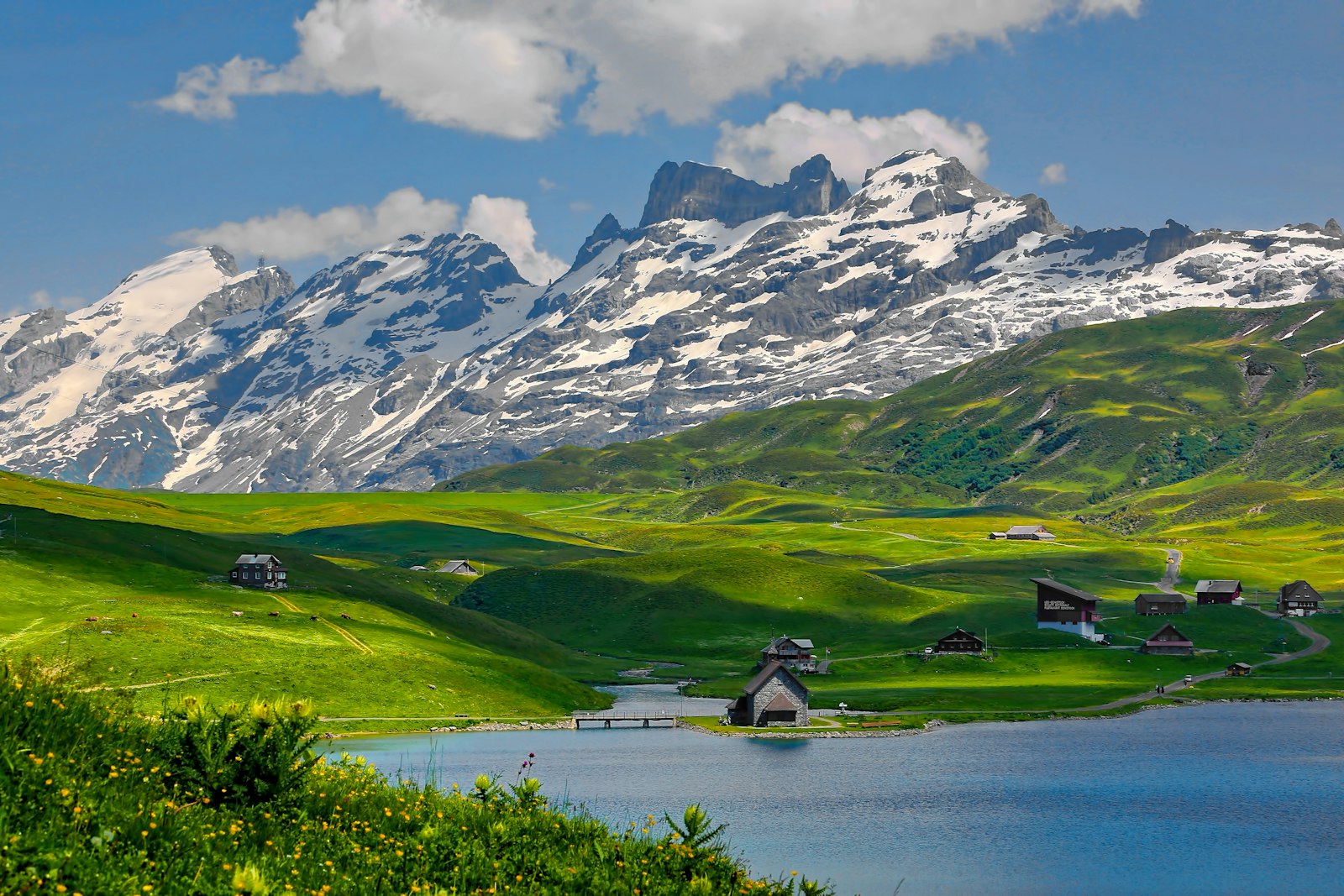
Lavaux teaches that landscape can be both productive and contemplative. It also teaches scale. The Alps remain distant punctuation; the lake is the constant horizon line; the human work sits in between, holding the middle ground literally and figuratively.
If you come only for a single overlook, you will leave with a picture. If you walk three terrace levels and listen for birds in the walls, you leave with a rhythm — which is what this journal tries to keep.